
Hauling mixed liquor from a neighboring plant to fix a nitrification failure is often a costly, logistical nightmare that doesn’t always guarantee a stable recovery. You’ve likely seen a standard nitrification booster for wastewater underperform when the temperature drops or watched helplessly as your biomass washes out after a toxic shock. It’s frustrating because nitrification is the most sensitive biological process in your facility; when it fails, your ammonia compliance is immediately on the line. We understand that as an engineer, you need a predictable, science-based solution rather than just hoping the "pink water" works this time.
This guide provides a technical framework for selecting high-performance microbial additives that deliver rapid restoration and long-term stability. You’ll learn how specialized formulations like MicroCat-XNC and XNL , backed by 40 years of research, bypass the slow doubling rates of indigenous nitrifiers to get your system back in balance. We’ll also examine how SBP technology solves the problem of biomass washout in systems with short hydraulic retention times. By the end of this article, you’ll know how to use treatability studies to de-risk your bioaugmentation strategy and maintain consistent ammonia removal through the toughest winter conditions.
Key Takeaways
- Understand the biological bottleneck where autotrophic nitrifiers are outcompeted by heterotrophs and learn how to bridge that growth rate gap.
- Compare high-concentration solutions like MicroCat-XNC against standard alternatives to ensure your plant achieves rapid ammonia removal after a toxic shock.
- Discover how SBP technology provides continuous bioaugmentation to prevent biomass washout in systems with short hydraulic retention times.
- Learn how to evaluate a nitrification booster for wastewater based on microbial density and ISO-certified shelf stability rather than just liquid volume.
- Identify how to de-risk your bioaugmentation program by using professional treatability studies to establish precise curative or maintenance dosing strategies.
Understanding the Nitrification Gap in Activated Sludge
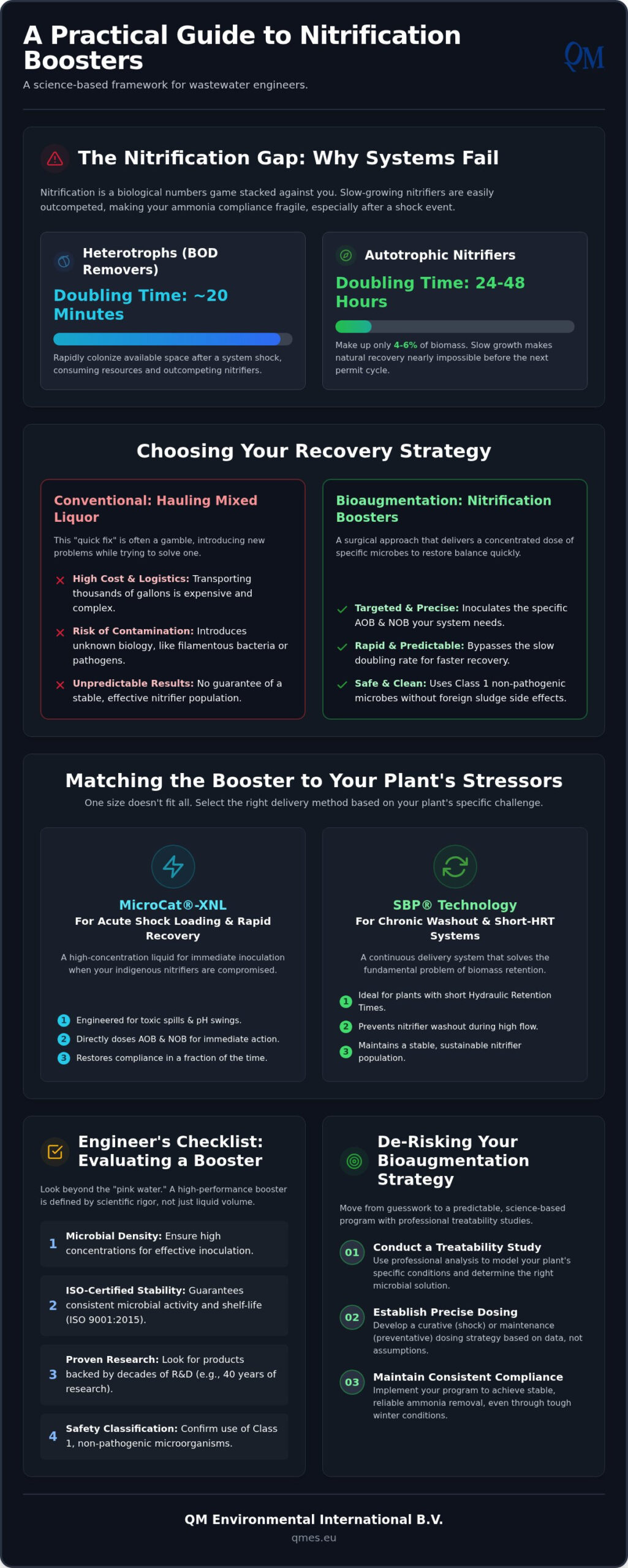
Nitrification is often the most volatile process in wastewater treatment. It isn’t just about oxygen levels or alkalinity; it’s a numbers game where the biological deck is stacked against you. In a typical activated sludge system, nitrifiers usually make up only 4% to 6% of the total microbial population. This tiny fraction is responsible for the entire conversion of ammonia to nitrate, making your compliance profile incredibly fragile.
The real bottleneck is the growth kinetics. Heterotrophic bacteria, which consume BOD, can double their population in about 20 minutes under ideal conditions. In contrast, autotrophic nitrifiers like Nitrosomonas and Nitrobacter often require 24 to 48 hours to double. When a toxic shock or a pH swing wipes out a portion of your nitrifiers, the heterotrophs quickly colonize the available space. This gap means your system can’t naturally recover fast enough to meet discharge limits before the next permit cycle. Common triggers like cold weather slow these kinetics even further, often leading to a total loss of nitrification just when you need it most.
Why Conventional Biomass Recovery Fails
Many engineers first look to haul mixed liquor from a nearby plant. While this seems like a quick fix, it’s often a gamble. You’re not just importing nitrifiers; you’re potentially introducing filamentous bacteria, pathogens, or poorly settling sludge that can lead to secondary bulking issues. Plus, the logistics and cost of hauling thousands of gallons of "seed" sludge are substantial. A specialized nitrification booster for wastewater offers a more surgical approach. Instead of a bulk transfer of unknown biology, you’re providing a concentrated dose of the specific AOB and NOB needed to restore balance without the side effects of foreign sludge.
Defining the Role of a Nitrification Booster
A high-performance nitrification booster for wastewater acts as a direct inoculation tool. By adding concentrated, Class 1 non-pathogenic microorganisms, you bypass the 24-hour doubling rate limitation. These boosters, such as the MicroCat formulations developed through 40 years of research, provide an immediate population of active bacteria that can handle seasonal temperature drops or chemical inhibitors. This bioaugmentation provides a vital buffer, ensuring that even when the environment becomes hostile, your ammonia removal remains consistent and your permit stays secure.
Comparing Nitrification Boosters: MicroCat-XNL vs. SBP Technology
Selecting a nitrification booster for wastewater isn’t a one-size-fits-all decision. It requires matching the microbial delivery method to your plant’s hydraulic profile and the specific nature of the nitrification loss. If you’re facing an acute permit violation due to a sudden toxic spill or a massive pH swing, you need a high-concentration liquid like MicroCat-XNC or XNL for immediate inoculation. However, if your system struggles with chronic washout due to short hydraulic retention times (HRT) or high flow variability, a continuous delivery system like the Small Bioreactor Platform (SBP) provides a more sustainable technical solution as it retains the nitrifiers inside the treatment basin.
The MicroCat-XNC Advantage for Shock Loading
MicroCat-XNC is engineered for rapid response when your indigenous population is compromised. While many "pink water" competitors offer low-density solutions, this formulation relies on ISO 9001:2015 certified production to maintain consistent microbial activity levels. This precision is critical because nitrifiers are sensitive to shelf-life degradation. By dosing directly into the aeration tank, you introduce a concentrated mass of Ammonia-Oxidizing Bacteria (AOB) and Nitrite-Oxidizing Bacteria (NOB) that starts working immediately. For engineers managing anoxic zones or anaerobic nitrogen removal, MicroCat-XNC offers specialized cultures tailored for those specific metabolic pathways. These liquid nitrifiers are effective tools for restoring compliance within a fraction of the time required for natural recovery.
SBP Technology : Solving Washout in Short-HRT Systems
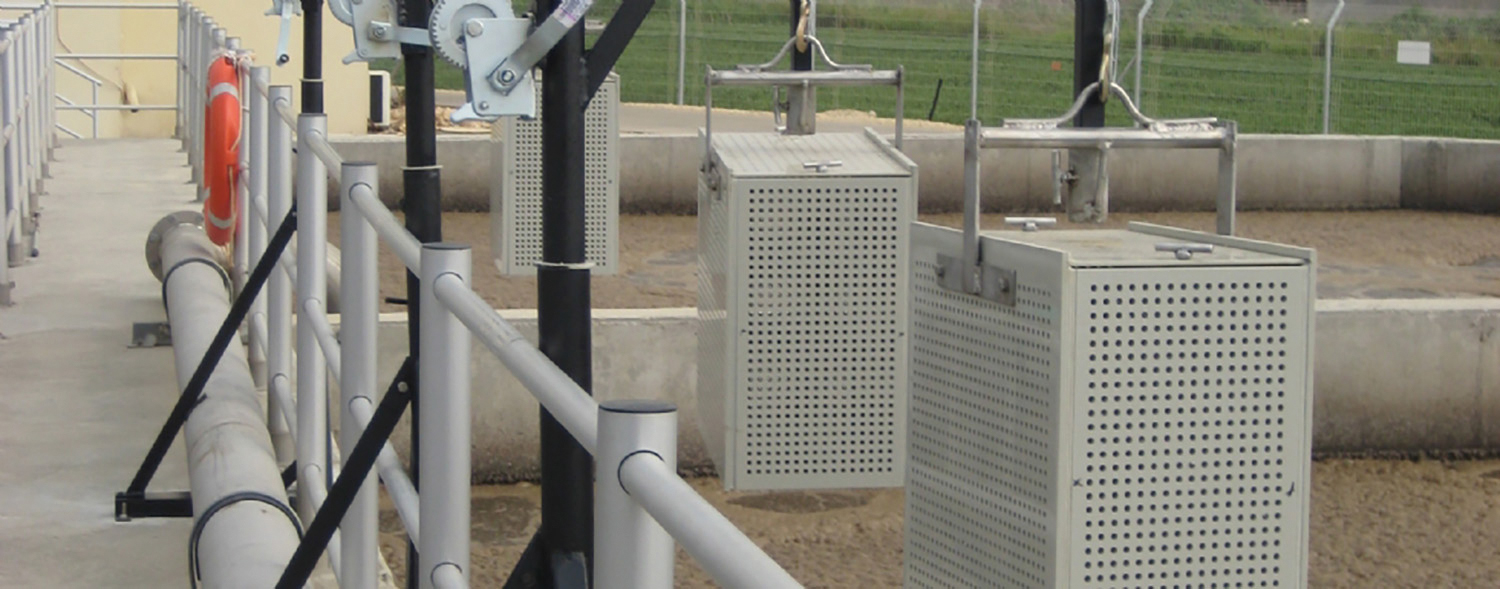
Continuous bioaugmentation through SBP technology addresses the fundamental problem of biomass retention. In many industrial plants, the hydraulic retention time is too short for slow-growing nitrifiers to establish a stable population. Liquid additives can wash out of the secondary clarifier before they provide any real benefit. The SBP platform uses encapsulated microorganisms within a protected environment, allowing them to thrive regardless of the plant’s sludge age. These capsules release a steady stream of active, acclimated nitrifiers into the main treatment stream. This constant "seeding" creates a biological buffer that resists toxic inhibition and maintains high local concentrations of nitrifiers. It’s a pragmatic way to manage chronic issues where a standard nitrification booster for wastewater might be lost to the effluent.
If you’re evaluating which delivery format will offer the best return on investment for your facility, exploring our range of wastewater treatment solutions can provide the technical data you need to make an informed choice.
Evaluating Product Quality: Beyond "Pink Water" Solutions
Engineers often rely on the visual "pink" tint of a liquid nitrifier as a proxy for quality. That color alone doesn’t tell you anything about microbial density or metabolic activity. When you’re selecting a nitrification booster for wastewater, you’re buying a biological outcome, not just a volume of liquid. High-quality formulations like MicroCat-XNC are produced in an ISO 9001:2015 certified laboratory to ensure that the ammonium oxidizing performance is at its highest. Nitrifying bacteria do not grow on a Petri dish used to determine the number of colony-forming units. Therefore, plating a nitrifying formulation is pointless. There are products, claiming to be nitrifiers, on the market displaying the cell count on the label however this represents the number of heterotrophic bacteria. These bacteria will consume ammonium-nitrogen as nutrient but the amount they consume is limited compared to what real nitrifiers convert. A better method to determine the quality of a nitrifying formulation is an activity assay, which measures the amount of ammonium converted to nitrate over a specific period of time.
Safety is another critical factor. You should only use Class 1 non-pathogenic microorganisms that comply with EFB norms. This ensures the safety of your operators and the receiving environment. Transparency is your best defense against underperforming products. We recommend starting with professional Treatability Studies to de-risk your purchase. These studies prove the microbes can survive and perform in your specific wastewater matrix before you invest in a full-scale program.
Technical Specifications to Request from Suppliers
Don’t accept generic data sheets as proof of efficacy. You should request a Certificate of Analysis (CoA) for every batch to verify microbial activity levels. It’s also vital to check for compliance with EU Directive 2000/54 on biological agents. This confirms you’re working with safe, documented strains. If you’re managing a plant in a cold climate, ask for specific performance data at low temperatures. A high-quality nitrification booster for wastewater should have documented efficacy even when the water temperature drops below 10°C.
The Hidden Costs of Diluted Products
A low price per gallon is often a trap. You need to calculate the "cost per active nitrifier" to understand the true value of a product. Shipping water-heavy, diluted formulations is expensive and inefficient. If a product requires five times the volume to achieve the same result as a concentrated alternative, your logistics and storage costs will spiral. Beyond the financial impact, the operational frustration of erratic performance is a major hidden cost. Dealing with a "pink water" product that fails to restore compliance leads to overtime, increased lab testing, and the constant threat of permit violations.
Selection Criteria: Matching Boosters to Your Plant’s Stressors
Choosing the right nitrification booster for wastewater requires a diagnostic approach that looks beyond effluent ammonia numbers. You need to identify the specific environmental or operational stressor preventing your indigenous biomass from thriving. In many cases, the failure isn’t due to a lack of nitrifiers, but rather an environment that’s become too hostile for their slow metabolic rates. We categorize these challenges into four primary scenarios to help you select the most effective microbial intervention.
- Scenario A: Cold Weather Performance. When water temperatures drop below 10°C, nitrifiers can experience a 50% or greater reduction in activity. MicroCat-XNC provides the high microbial mass necessary to maintain ammonia removal during these seasonal dips.
- Scenario B: Toxic Inhibition. Industrial spills or slug loads of chemicals can quickly deactivate sensitive AOB and NOB populations.
- Scenario C: Facility Startup. For new plants or seasonal operations, natural nitrification can take 20 to 30 days to establish. Bioaugmentation can reduce this window to just a few days.
- Scenario D: Chronic SRT Limitations. If your plant runs at a low mean cell residence time, nitrifiers are often washed out faster than they can reproduce.
Managing Temperature and pH Constraints
While a nitrification booster for wastewater provides the necessary biology, it can’t overcome a lack of chemical "fuel." Nitrification is an acid-producing process that consumes significant alkalinity. Engineers should maintain a stoichiometric ratio of approximately 7.14 mg of alkalinity as CaCO3 for every 1 mg of ammonia-nitrogen oxidized to ensure the nitrification process does not stall due to pH depression. If your pH drops below 6.8, even the most concentrated booster will struggle to perform. In cold weather, MicroCat-XNC and XNL remains effective below 10°C because it introduces a pre-acclimated population that doesn’t have to wait for indigenous growth cycles to catch up with the loading.
Addressing Toxicity and Inhibitory Compounds
Industrial facilities often face complex waste streams containing heavy metals, phenols, or surfactants that act as potent inhibitors. In these environments, adding nitrifiers alone isn’t enough if the underlying toxicity remains. We often recommend using MicroCat-HX or XR in tandem with our nitrifying cultures. This product helps degrade the inhibitory organic compounds, "clearing the path" for the nitrifiers to work. This dual-action approach is a staple of modern industrial wastewater treatment solutions. If you’re dealing with erratic performance, a professional site assessment can help pinpoint the exact inhibitor and de-risk your remediation plan.
Implementing Bioaugmentation: From Treatability Studies to Full-Scale Dosing
Successful bioaugmentation isn’t as simple as pouring a drum of microbes into your aeration tank and hoping for the best. For engineers, the goal is predictable, repeatable performance. Success starts with a professional Treatability Study, which acts as a laboratory-scale proof of concept. This step allows us to determine if a specific nitrification booster for wastewater will thrive in your plant’s unique chemical environment before you commit to full-scale application. By identifying potential inhibitory factors early, we de-risk the investment and ensure the dosing strategy is mathematically sound.
Once the study is complete, we transition to dosing. Curative applications involve high-concentration doses designed to rapidly re-establish a population after a total process upset. In contrast, maintenance dosing provides a steady, lower-volume feed to prevent seasonal drift or to buffer against minor toxic shocks. Monitoring this transition requires tracking the full nitrogen profile. You’ll want to watch for the decrease in Ammonia-Nitrogen (NH3-N), the transient spike in Nitrite-Nitrogen (NO2-N), and the eventual rise in Nitrate-Nitrogen (NO3-N), which signals a complete recovery of the autotrophic population.
The QM Environmental Treatability Protocol
Our approach to Site Assessment and Remediation Planning is built on 40 years of biological research. We don’t just provide a generic product; we develop customized microbial formulations tailored to the specific stressors of your facility. This process includes virtual or on-site staff training to ensure your WWTP operators understand the biological mechanisms at play. This collaborative framework ensures that the nitrification booster for wastewater is applied at the optimal location and time, maximizing its efficacy and reducing overall operational costs.
Getting Started with Nitrification Bioaugmentation
The first step toward long-term biological stability is a technical consultation with our engineering team. We rely on evidence-based decision-making, which is why we provide peer-reviewed technical papers to support our recommendations. Whether you’re facing an immediate compliance crisis or looking to optimize your winter performance, we’re here to help. Explore our full range of wastewater treatment services to see how we can support your plant’s specific needs. Contact QM Environmental today to start your site assessment and secure your permit compliance for 2026 and beyond.
Securing Long-Term Nitrification Stability
Transitioning from reactive sludge hauling to proactive bioaugmentation is the most pragmatic way to maintain ammonia compliance. You’ve seen how a high-performance nitrification booster for wastewater like MicroCat-XNC can bridge the growth gap that often leaves conventional systems vulnerable. By choosing formulations backed by over 40 years of research and ISO 9001:2015 certified production, you ensure that every dose contains the microbial density needed to withstand toxic shocks and seasonal temperature drops.
Working with Class 1 GRAS microorganisms provides a safe, non-pathogenic solution for your operators and the environment. Don’t leave your discharge permits to chance during the next cold snap or industrial upset. We invite you to Request a Treatability Study from QM Environmental to de-risk your biological strategy and establish a clear path to stability. With the right microbial tools and technical support, consistent ammonia removal is well within reach for any facility.
Frequently Asked Questions
What is the best nitrification booster for wastewater in cold weather?
MicroCat-XNC and XNL are the most effective solutions for maintaining ammonia removal when temperatures drop below 10°C. Cold water significantly slows the doubling rate of indigenous nitrifiers, but this high-concentration liquid provides a pre-acclimated microbial mass that bypasses those kinetics. It’s a reliable nitrification booster for wastewater because it introduces active Ammonia-Oxidizing Bacteria (AOB) and Nitrite-Oxidizing Bacteria (NOB) that don’t rely on the slow growth cycles of the existing biomass.
How long does it take for a nitrification booster to show results?
You can typically expect to see a measurable reduction in effluent ammonia within 48 to 72 hours of the initial dose. While total system recovery depends on your plant’s organic loading and temperature, the high microbial density of professional bioaugmentation products speeds up the process significantly compared to natural recovery. We recommend tracking the transient rise in nitrite as a leading indicator that the nitrification booster for wastewater is successfully colonizing your system.
Can I use MicroCat-XNC/XNL in a municipal activated sludge system?
Yes, MicroCat-XNL is frequently used in municipal activated sludge systems to handle seasonal transitions or recovery after toxic shocks. Municipal plants often face challenges with high peak flows or cold weather, making them ideal candidates for liquid bioaugmentation. Since these formulations use Class 1 non-pathogenic microorganisms, they’re safe for municipal discharge and won’t disrupt the existing secondary treatment processes or sludge handling operations.
What is the difference between liquid nitrifiers and SBP technology ?
Liquid nitrifiers like MicroCat-XNC and XNL are designed for rapid, curative response after a process upset or a sudden ammonia spike. SBP technology is a continuous delivery system that uses encapsulated microorganisms to prevent biomass washout. If your plant has a short hydraulic retention time or experiences chronic nitrification failure, SBP provides a steady, protected supply of nitrifiers that liquid cultures might not be able to maintain due to flow variability.
How much alkalinity is required for effective nitrification?
Nitrification requires approximately 7.14 mg of alkalinity as CaCO3 for every 1 mg of ammonia-nitrogen oxidized. If your alkalinity levels fall below this ratio, the pH in your aeration basin will drop, which can inhibit or completely stall the nitrification process. It’s vital to ensure your buffering capacity is sufficient before adding microbes, as even the best biological additives cannot function effectively in an acidic environment below pH 6.8.
Are nitrification boosters safe for the environment and staff?
Our formulations are entirely safe for both the environment and your plant personnel. We only use Class 1 non-pathogenic microorganisms that comply with European Federation of Biotechnology (EFB) norms. These are naturally occurring soil and water bacteria that don’t pose a health risk. They’re specifically selected for their ability to degrade pollutants without creating hazardous byproducts, ensuring your facility remains compliant with both safety and discharge regulations.
What happens if I over-dose a nitrification booster?
Over-dosing a biological booster isn’t harmful to the treatment process or the environment, but it’s inefficient from a budgetary perspective. Since these are non-pathogenic bacteria, adding too many won’t cause toxic effects, though you might see a slight, temporary increase in suspended solids if the dose is massive. The main risk of over-dosing is the unnecessary cost; this is why we recommend starting with a treatability study to establish precise dosing parameters.
Do I need to add nitrifiers continuously or just during upsets?
The choice between maintenance and curative dosing depends on your plant’s sludge age and hydraulic retention time. If your system has a long enough SRT to retain nitrifiers, you’ll likely only need boosters during upsets or seasonal changes. However, industrial plants with short HRTs or high flow variability often benefit from continuous maintenance dosing. This ensures a steady population of nitrifiers is always present to handle incoming ammonia loads without the risk of washout.
Disclaimer
Disclaimer
The information on this site is intended solely for personal, non-commercial use. Reproduction, modification, storage in an automated database, or publication of the contents of this site, or any part of its publications, in any form or for any purpose whatsoever, is prohibited without the written permission of QM Environmental International.
We have compiled the information on this site with the utmost care. However, some information may be outdated or incorrect. QM Environmental International accepts no liability for the consequences of actions or omissions based on the information provided.
We have taken all reasonable steps to keep this site free of computer viruses, but we cannot guarantee that it is completely virus-free. QM Environmental International is not liable for any damage to your computer equipment or software caused by viruses while visiting this site.
This site contains hyperlinks to other websites not designed or managed by QM Environmental International. QM Environmental International accepts no liability for the content and use of these sites.
If you have any questions about our privacy and cookie policy, please contact us at info@qmes.nl.
Last updated: June 24, 2025